Winter in Durham: Mild Weather, Real Pet Risks
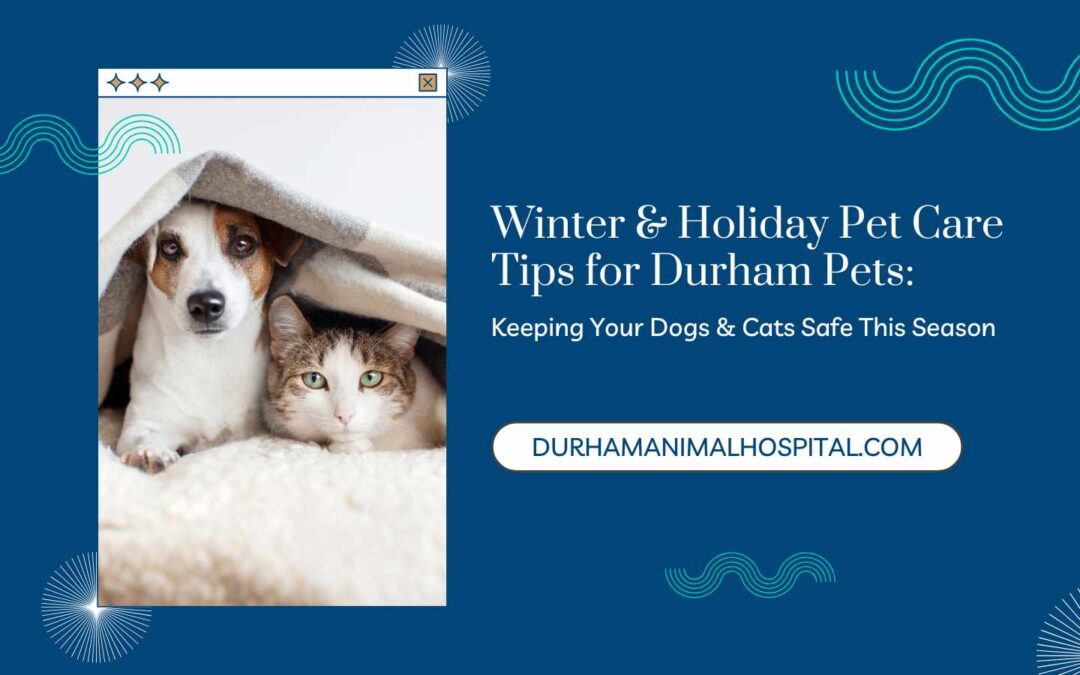
Winter & Holiday Pet Care Tips for Durham Pets: Keeping Your Dogs & Cats Safe This Season – Winter in Durham may be milder than other parts of the country, but cooler temperatures, early sunsets, holiday gatherings, and seasonal hazards can still affect your pet’s health and comfort. With average winter highs in the low 50s and overnight lows near freezing, pets can face chilly mornings, joint stiffness, indoor boredom, and increased exposure to holiday plants and foods.
Winter & Holiday Pet Care
At Durham Animal Hospital, we want to help your pets stay healthy, happy, and stress-free through the holiday season and into the new year. Here are our top winter and holiday safety recommendations for dogs and cats in the Durham area.
1. Keep Pets Comfortable in Mild Winter Temperatures
While Durham doesn’t usually experience harsh winter storms, the cooler air and damp conditions can still impact your pets.
Watch the Overnight Chill
Short-haired dogs, senior pets, kittens, and small breeds feel the cold more than others. Early morning and nighttime temperatures can dip close to freezing, which may be uncomfortable or even risky.
Winter comfort tips:
- Provide warm bedding away from drafts
- Consider a sweater or coat for short-haired or senior dogs
- Limit long outdoor time on especially cold mornings
- Dry your pet after going outside if it’s damp or drizzling
Protect Those Paws
Even without snow, cold or wet pavement can cause discomfort.
Check paws for:
- Redness
- Cracks
- Peeling pads
Applying a paw balm can help create a barrier against cold and moisture.
2. Support Joint Health—Especially for Senior Pets
Cooler temperatures can make stiff or arthritic joints feel worse. If your pet shows signs of discomfort, this time of year is ideal for a check-in.
Common signs of joint pain include:
- Slower walks
- Hesitation to jump
- Difficulty getting up
- Limping after resting
We offer pain management options, joint supplements, weight management guidance, and personalized treatment plans to help your pet move comfortably all winter long.
3. Keep Pets Engaged Indoors
Shorter days mean less outdoor playtime. When pets don’t burn off enough energy, they may develop anxiety, weight gain, or destructive habits.
Try adding:
- Puzzle feeders
- Indoor fetch or laser play
- Scent-based games
- New toys rotated weekly
- Small training sessions to stimulate the brain
Indoor enrichment is especially important during holiday chaos, when routines may shift.
4. Holiday Foods & Treats to Avoid
The holiday season brings delicious meals — but many popular human foods are unsafe for pets.
Dangerous holiday foods include:
- Turkey bones
- Ham and fatty leftovers
- Chocolate
- Xylitol (in sugar-free treats)
- Grapes and raisins
- Garlic and onions
- Alcohol
- Yeast dough
If you want to give your pet a special seasonal treat, lean toward:
- Plain green beans
- Plain pumpkin (not pie filling)
- Cooked sweet potato
- A small amount of plain, lean turkey meat
When in doubt, avoid sharing — or give your pet an approved holiday treat from home.
5. Holiday Decorations & Plants: Hidden Hazards
Your festive home may pose risks to curious pets.
Be cautious with:
- Tinsel (especially dangerous for cats)
- Ribbons and bows
- Ornament hooks
- Lit candles
- Glass ornaments
- Electrical cords
- Tree water (can contain chemicals or bacteria)
Holiday plants to avoid or keep out of reach:
- Poinsettias
- Mistletoe
- Holly
- Lilies (extremely toxic to cats)
If your pet gets into something questionable, call us immediately. Quick action is key.
6. Hosting Guests? Prepare Your Pets
The holidays bring visitors, noise, and schedule changes. Pets can experience stress or anxiety during busy gatherings.
Helpful tips:
- Provide a quiet room with their bed, water, and toys
- Play soft music or white noise
- Maintain feeding and potty routines
- Let guests know not to feed table scraps
- Microchip and ID your pet in case a door is accidentally left open
If you know your pet gets anxious, talk to us about supplements or behavioral support options before your events.
7. Winter Wellness Check: The Perfect Time of Year
Winter is an ideal season to schedule a routine wellness exam before the start of the new year.
A winter wellness visit may include:
- Vaccinations and boosters
- Parasite prevention (yes — still needed year-round in NC!)
- Weight evaluation
- Dental care planning
- Joint-health support
- Bloodwork for senior pets
Keeping your pet healthy in winter sets them up for a strong and active spring.
8. Year-Round Parasites in North Carolina
Even in winter, Durham’s climate is warm enough that fleas, ticks, and mosquitoes remain active. We strongly recommend year-round parasite prevention for all pets.
Heartworm disease, spread by mosquitoes, is particularly active in North Carolina — even in December.
If you’re unsure whether your pet is up to date, we’re happy to help you review your prevention plan.
Final Thoughts: Keeping Durham Pets Safe All Season Long – Winter & Holiday Pet Care
Winter in Durham may be mild, but it still brings plenty of seasonal changes that affect your pet’s health, comfort, and behavior. With a little preparation — and regular veterinary support — your pets can enjoy a safe, cozy, and joyful holiday season.
If you have questions, notice changes in your pet, or want to schedule a winter wellness exam, the team at Durham Animal Hospital is here for you.
📞 Contact Us:
https://durhamanimalhospital.com/veterinary-services/
Durham Animal Hospital and North Churton Animal Hospital are here for you. You can contact us through our website, but if your pet requires emergency care, call:
- Durham: (919) 620-7387
- Hillsborough: (919) 644-7387
Dr. James Miller and our experienced team are ready to help protect your pet’s health and happiness through every season.
Find us on Facebook: